Essential Guide to 7v7 Soccer Field Size and Dimensions
Looking for the specific 7v7 soccer field size dimensions? A 7v7 field is usually 55-65 yards long and 35-45 yards wide. This article covers all the essential details, including layout and goal size, to help you properly set up a 7v7 soccer field.
⚽ Key Takeaways
- •A standard 7v7 soccer field ranges from 55 to 65 yards in length and 35 to 45 yards in width, with a goal size of 6 feet by 18 feet to suit young players.
- •Proper field dimensions for youth soccer facilitate skill development, injury prevention, and promote fair competition among players.
- •Training and gameplay on accurately sized 7v7 fields enhance technical skills and teamwork, supporting a progressive development approach for young athletes.
Understanding 7v7 Soccer Field Dimensions
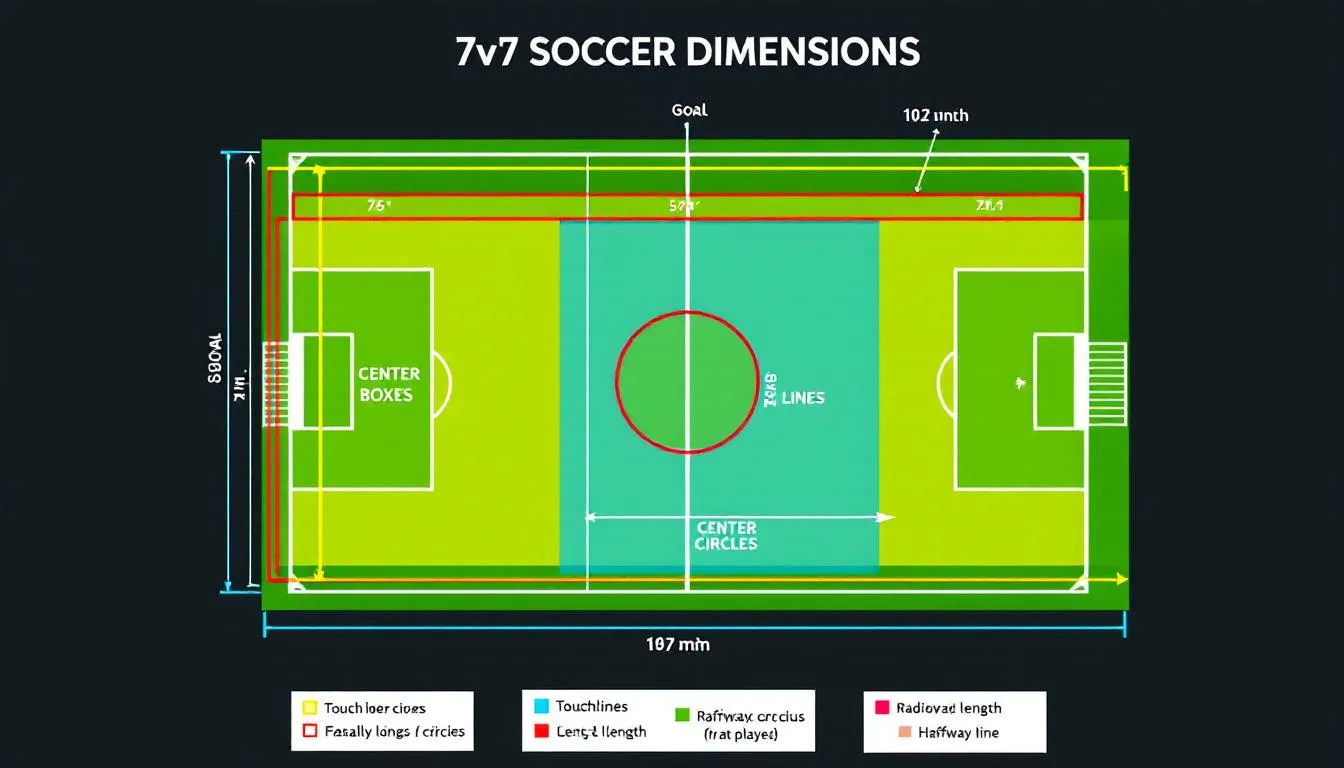
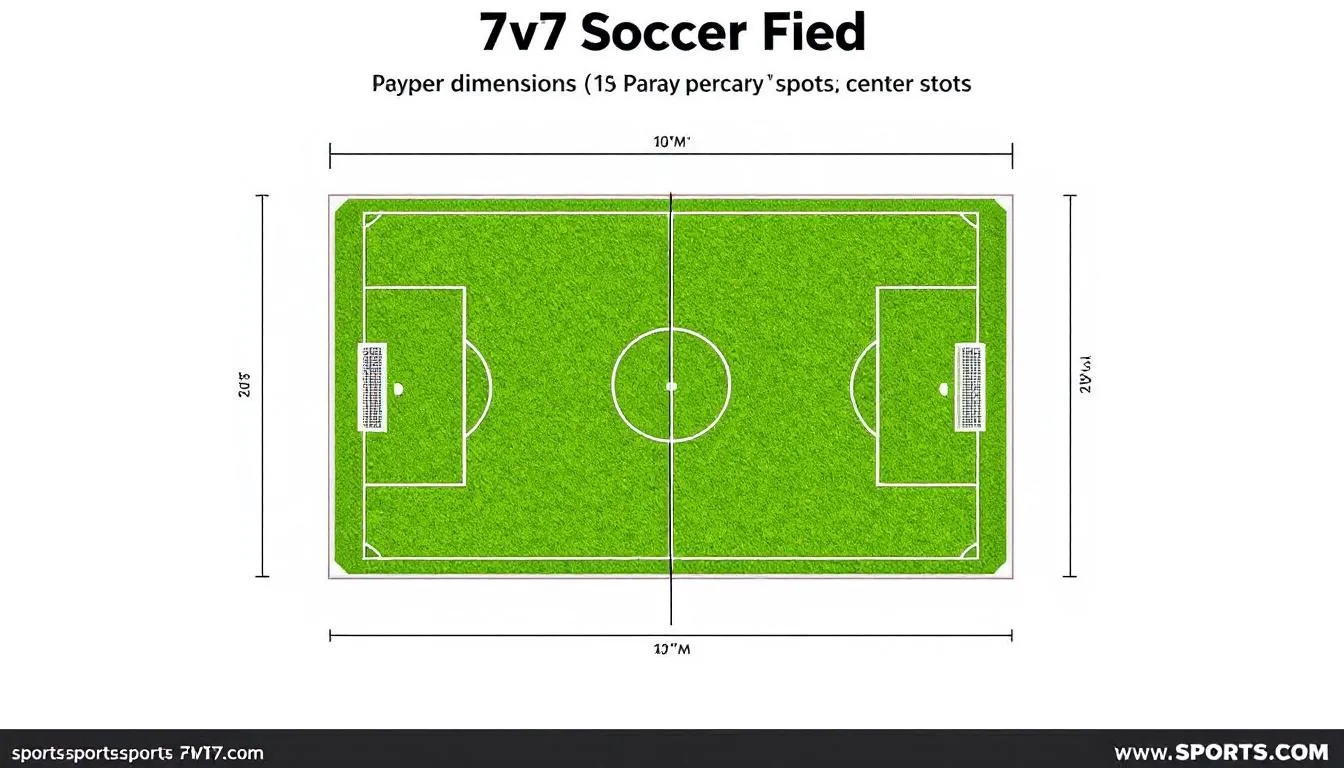
When it comes to youth soccer, the dimensions of the field play a pivotal role in shaping the game. A standard 7v7 soccer field typically ranges from 55 to 65 yards in length and 35 to 45 yards in width. These dimensions ensure that the field is neither too large nor too small, providing just the right amount of space for young players to develop their skills and enjoy the game.
The US Soccer guidelines recommend a goal size of 6 feet by 18 feet for 7v7 games. This goal size is appropriate for the physical abilities of young players, allowing them to experience the thrill of scoring while also challenging goalkeepers to improve their skills.
Adhering to these dimensions helps build a balanced and competitive environment that fosters growth and enjoyment in youth soccer. If you're looking for soccer fields near you, check out our comprehensive soccer field directory.
Detailed Field Layout for 7v7 Soccer
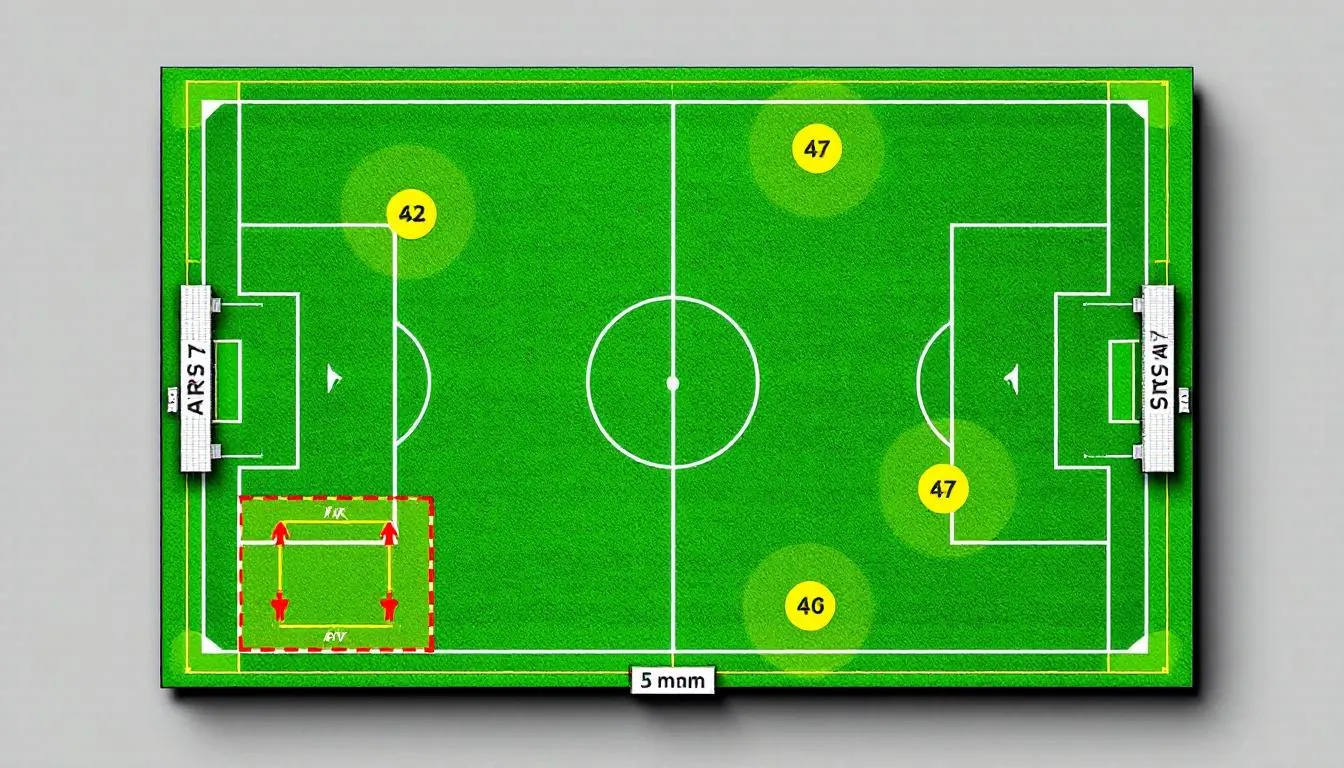
The layout of a 7v7 soccer field is meticulously designed to enhance gameplay and ensure that every aspect of the game is well-covered. Essential components such as the center circle, penalty box, and goal areas each serve specific functions that contribute to the flow and fairness of the game.
We'll break down these components in detail: the center circle, the penalty spot and box, and the goal areas and their sizes. Each of these elements plays a crucial role in the dynamics of a 7v7 soccer game, and understanding their dimensions and purposes will give you a deeper appreciation of the sport.
Center Circle and Kick Offs
The center circle is a fundamental feature of a 7v7 soccer field, marked at the midpoint of the field with a radius of 8 yards. This area is crucial for kick-offs, as it dictates that players from the non-kicking team must stay outside this circle until the ball is in play. This rule ensures that the team kicking off has the space needed to start the game or resume play after a goal.
Kick-offs are a vital part of the game, set the tone for each half and after every goal. The clear marking of the center circle ensures that all players adhere to the rules, maintaining the structure and flow of the game.
Recognizing the importance of the center circle helps players respect its boundaries and appreciate its role in organizing play.
Penalty Spot and Penalty Box
The penalty box in a 7v7 soccer field has the following characteristics:
- Measures 12 yards in length and 24 yards in width
- Is the area where fouls committed result in penalty kicks
- Contains the penalty spot, which is the designated spot from which penalty kicks are taken
This area is where the game can take dramatic turns and create exciting moments.
During a penalty kick, the player must take their shot from the penalty spot, which is positioned 10 yards from the goal line. This setup adds a layer of excitement and pressure, as the outcome of these kicks can significantly impact the game.
Clear marking of the penalty box and spot ensures that both players and referees are aware of the rules and can make accurate decisions.
Goal Areas and Goal Size
The goal areas in a 7v7 soccer field are located immediately in front of the goals and are crucial for goalkeeping and defensive strategies. Key details about the goals include:
- Standard dimensions: 12 feet in width and 6 feet in height
- Size appropriate for the age and skill level of youth players
- Provides a challenging yet attainable target for scoring
The goal frame must not exceed 6.5 feet in height and 18.5 feet in width. These dimensions ensure that the goals are proportional to the field size and player capabilities. Properly sized goals maintain a balanced game, encouraging both offensive and defensive plays while giving goalkeepers a fair chance to defend their net.
Looking for MLS stadiums? Check out our coverage of Chase Stadium - Inter Miami CF or explore other MLS stadiums.
Youth Soccer Field Guidelines
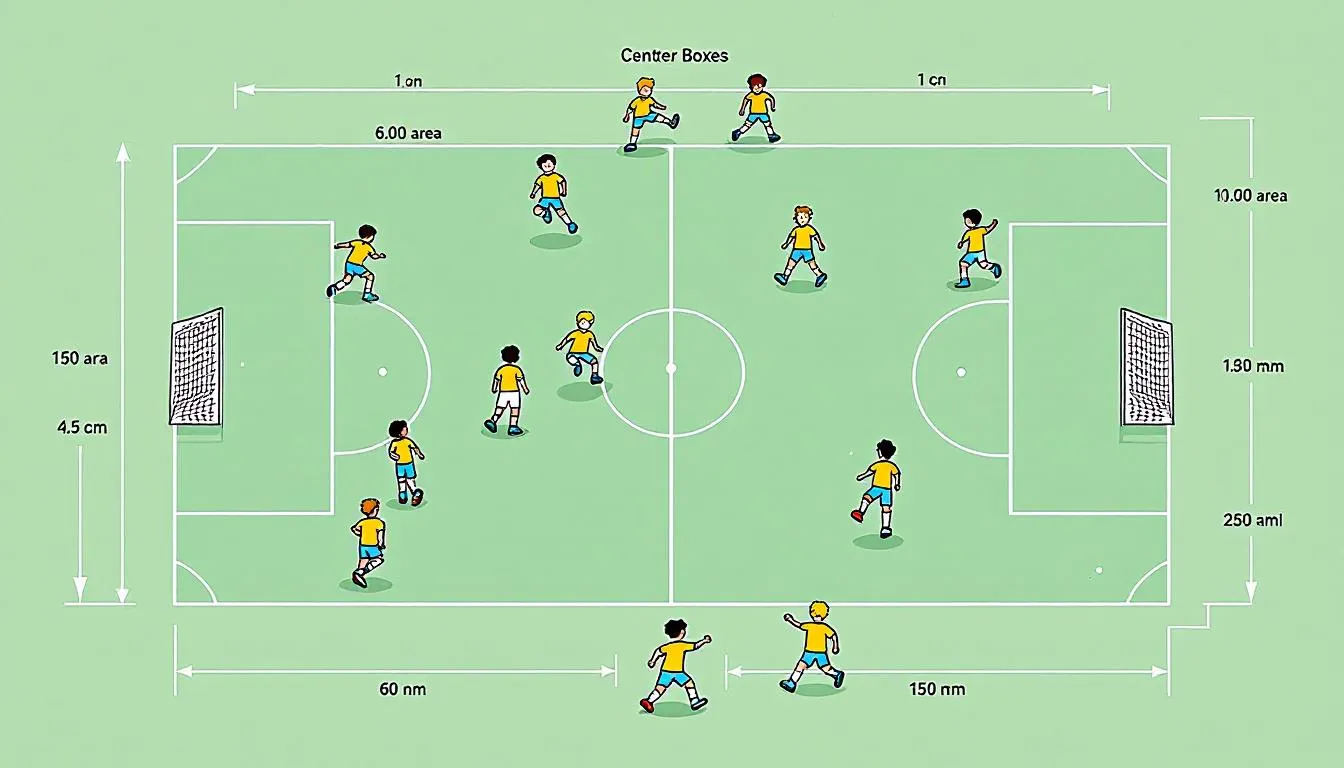
Youth soccer field dimensions are designed with player development and safety in mind. By ensuring that the field size matches the physical and cognitive abilities of younger players, we create an environment where they can develop their skills effectively. Adhering to these guidelines also helps minimize fatigue and injury, allowing kids to enjoy the game and improve their performance.
Appropriate field dimensions are crucial for youth soccer because they help players develop skills that are relevant to actual game scenarios. Smaller fields for younger players encourage more touches on the ball, better decision-making, and improved teamwork. As players grow older and transition to larger fields, they can apply these skills in more complex and competitive situations.
Age-Specific Field Sizes
Youth soccer field dimensions vary significantly based on age groups to better accommodate player development. For players under 6 years old, the recommended field dimensions are between 25 to 35 yards in length and 15 to 25 yards in width. These smaller fields are ideal for 4v4 or 5v5 games, allowing young players to stay engaged and involved in the action.
As players grow older, the field sizes increase to match their physical capabilities and developmental needs. For U9 and U10 teams, fields should range from 55 to 65 yards in length and 35 to 45 yards in width. Players aged 11 and 12 typically play on fields measuring 70 to 80 yards long and 45 to 55 yards wide, preparing them for full-size fields.
These age-specific dimensions ensure that players can develop their skills progressively and safely. Find soccer fields across the USA or explore soccer fields in California.
US Soccer Recommendations
US Soccer has established specific guidelines for the dimensions of the goal frame used in 7v7 soccer games. The goal frame must not exceed 6.5 feet in height and 18.5 feet in width. These guidelines ensure that the goals are appropriately sized for youth players, promoting fair competition and skill development.
US Soccer recommends that players 12 years old and younger play on smaller fields, transitioning to full-size fields at age 13. This gradual increase in field size helps players adapt to the game's physical demands while developing their skills. Following these recommendations helps soccer clubs create a supportive and effective environment for youth development.
Comparing 7v7 Field Sizes with Other Formats
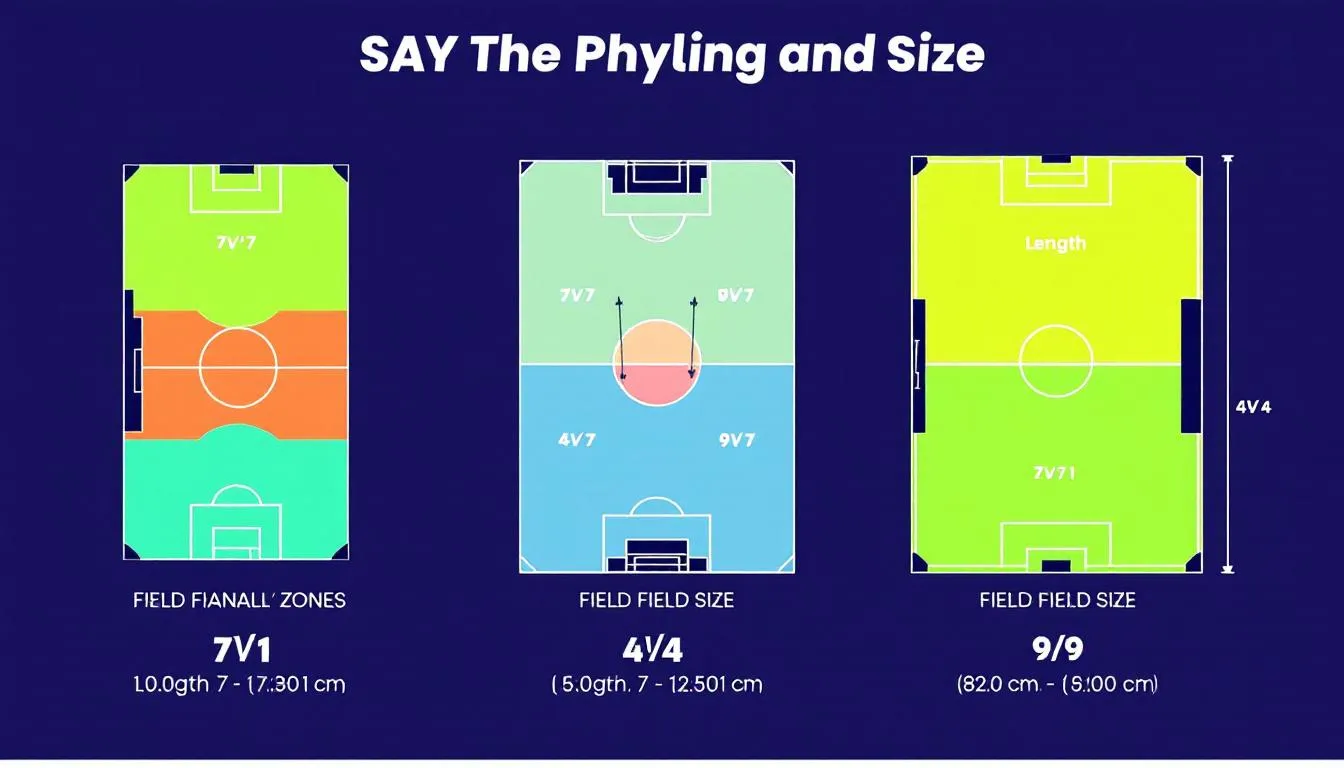
Recognizing the differences between various soccer field sizes is crucial for aligning the game's dynamics with the age group and playing style. 7v7 soccer fields are generally larger than 4v4 fields, providing more space for players and facilitating a different style of play. Compared to 9v9, 7v7 fields strike a balance between size and player numbers, allowing for both technical skills and teamwork.
Full-size soccer fields are significantly larger than 7v7 fields, which affects player positioning and game strategy. The dimensions of a full-size field enable a more expansive style of play, contrasting with the more compact formations used in 7v7. Recognizing these comparisons helps coaches and players appreciate the unique challenges and opportunities presented by each format.
4v4 and 9v9 Field Comparisons
A 4v4 soccer field can be found using our Soccer Field Map:
- Measures 25 to 35 yards long and 15 to 25 yards wide, significantly smaller than the 7v7 format
- Is ideal for very young players, allowing them to stay engaged and involved in the game
- Requires players to develop quick decision-making and close ball control skills due to the limited space
For 9v9 soccer, the field dimensions are larger than 7v7, with lengths ranging from 70 to 80 yards and widths from 45 to 55 yards. This increase in size accommodates more players and introduces more complex tactical elements to the game. Comparatively, 4v4 fields are significantly smaller than 7v7 fields, while 9v9 fields show a progressive increase in size as team members grow.
Visit top soccer fields in Texas or check out indoor soccer fields for year-round training.
Full-Size Field Comparison
The dimensions of a 7v7 soccer field are significantly smaller than those of a full-size soccer field, which typically measures between 98 and 131 yards in length. Full-size soccer fields for professional play are generally 100 to 130 yards long and 50 to 100 yards wide. This vast difference in size impacts how the game is played, with full-size fields allowing for more expansive and strategic play.
A full-size soccer field for adults typically measures between 100 to 130 yards long and 50 to 100 yards wide, which is much larger than the dimensions of a 7v7 field. The larger field size requires players to cover more ground, enhancing their endurance and tactical awareness. In contrast, the smaller 7v7 fields focus on developing technical skills and close teamwork.
Importance of Proper Field Dimensions for Training and Games
Accurate field dimensions ensure player safety and maintain fair competition. Training exercises designed for a 7v7 field can enhance teamwork and positional play among players. Practicing on a 7v7 field can enhance spatial awareness and tactical decision-making through constrained spaces. Proper line marking on the field ensures clarity for players and officials, enhancing game flow.
Accurate field dimensions allow players to develop their skills in a consistent environment that mirrors match conditions. This consistency is vital for building confidence and competence in young athletes, ultimately leading to better performance during games.
Training Drills on a 7v7 Field
Training drills on a 7v7 field can focus on formations like the 2-3-1, allowing players to practice positional play and ball movement. These drills help players understand their roles within the team and develop the ability to work together effectively. Correct field dimensions are vital for ensuring consistency in player performance and facilitating specific training objectives.
Practicing on a 7v7 field can enhance technical skills through focused exercises that require quick decision-making and precise ball control. By practicing in a space that mimics actual game conditions, players can better transfer their skills to competitive matches, improving their overall performance and enjoyment of the game.
Experience the excitement of soccer by finding soccer fields near you or explore specific locations like soccer fields in Florida.
Impact on Gameplay
Accurate field dimensions optimize player performance and ensure competitive balance during games. When the field is properly sized, players can position themselves more effectively, make better strategic decisions, and execute plays with greater precision.
Following standard dimensions helps maintain the integrity of the game, ensuring that all players have an equal opportunity to succeed. This balance is crucial for fostering a positive and competitive environment where young athletes can thrive and develop their love for the sport.
Building and Marking a 7v7 Soccer Field
Building and marking a 7v7 soccer field requires attention to detail and adherence to specific dimensions to ensure the field meets all necessary standards. Setting up a 7v7 soccer field involves:
- Marking the boundary lines
- Placing goals at each end
- Designating the center circle
- Marking the penalty areas according to the relevant dimensions
Properly marking these areas ensures fair play and that all rules are clearly visible to players and officials.
Regular maintenance of a 7v7 soccer field includes mowing, watering, and ensuring the marking lines remain visible and undamaged for optimal play conditions. Consistent upkeep enhances the safety and playability of the field and prolongs its lifespan, providing a reliable surface for training and games.
Setting Up the Field
Setting up a 7v7 soccer field involves several key steps. For indoor fields, dimensions typically range from 60 feet by 150 feet to 80 feet by 160 feet. These dimensions provide ample space for 7v7 games while accommodating the constraints of indoor facilities. Outdoor fields should be measured and marked according to the standard dimensions of 55 to 65 yards in length and 35 to 45 yards in width.
Start by marking the boundary lines with durable paint or chalk. Then, place the goals at each end of the field, ensuring they meet the standard dimensions of 12 feet in width and 6 feet in height.
Finally, mark the center circle, penalty box, and goal areas according to the specified measurements. Accurate marking is crucial for maintaining the integrity of the game and ensuring that all players and officials are clear on the field boundaries and key areas.
Looking for professional soccer fields? Explore soccer stadiums in Texas or find best soccer fields near you.
Maintenance Tips
Routine maintenance is crucial for keeping a 7v7 soccer field in optimal condition. Regular grooming of the turf maintains turf fibers and ensures even infill distribution, enhancing the surface's safety and playability. Additionally, keeping the marking lines visible and undamaged is essential for clear gameplay and rule adherence.
Regular maintenance practices, such as mowing, watering, and checking for damage or wear, extend the lifespan of the field and ensure it remains a safe and enjoyable environment for players. By investing in proper upkeep, you can improve the overall quality of the playing surface, which is vital for both training and competitive games.
Summary
In summary, understanding and implementing the correct dimensions for a 7v7 soccer field is essential for fostering a positive and effective environment for youth soccer. From the basic field dimensions to the detailed layout of key areas like the center circle, penalty box, and goal areas, each component plays a crucial role in the game. Adhering to age-specific guidelines and US Soccer recommendations ensures that young players can develop their skills in a safe and supportive setting.
Proper field dimensions are not only vital for training drills and gameplay but also for maintaining competitive balance and player safety. By following the guidelines for building and marking a 7v7 soccer field and committing to regular maintenance, you can create a high-quality playing surface that benefits players, coaches, and spectators alike. Embrace the journey of youth soccer with confidence, knowing that your field is set up for success.
Frequently Asked Questions
What are the standard dimensions of a 7v7 soccer field?
A standard 7v7 soccer field typically measures between 55 to 65 yards in length and 35 to 45 yards in width. This size ensures a suitable playing area for effective gameplay.
What is the recommended goal size for a 7v7 soccer field?
The recommended goal size for a 7v7 soccer field is 12 feet wide and 6 feet high. This size ensures a suitable challenge for players while promoting fair play.
How large should the penalty box be in a 7v7 soccer field?
The penalty box for a 7v7 soccer field should measure 12 yards in length and 24 yards in width. This ensures proper play within the game's framework.
What are the dimensions of the center circle in a 7v7 soccer field?
The center circle in a 7v7 soccer field has a radius of 8 yards. This ensures ample space for players during kick-offs and play restarts.
Why are proper field dimensions important for youth soccer?
Proper field dimensions are crucial for player safety, fair competition, and fostering skill development in youth soccer. Adhering to these standards ensures an optimal environment for young athletes to grow and enjoy the game.